
Regenerative Agriculture Market Poised to Reach $4.36 Billion by 2024 Amid Growing Support and Sustainable Practices
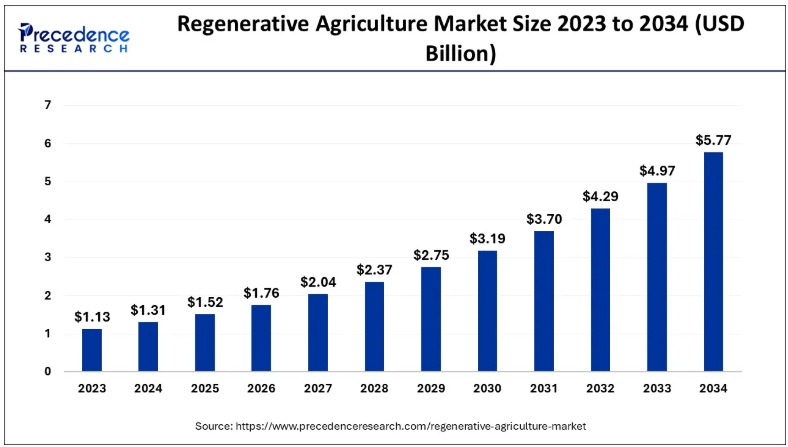
The global agricultural landscape is undergoing a transformative shift as regenerative agriculture gains momentum as a sustainable alternative to conventional farming methods. Recent projections indicate that the regenerative agriculture market is poised to reach a valuation of $4.36 billion by 2024, reflecting a robust compound annual growth rate (CAGR) of 15.6% during the forecast period.
Key Drivers of Market Growth
Several factors are propelling the adoption and expansion of regenerative agriculture practices:
- Government Initiatives and Subsidies: Many governments worldwide are implementing policies and providing financial incentives to encourage farmers to adopt regenerative practices. These initiatives aim to promote soil health, enhance biodiversity, and reduce carbon emissions, thereby supporting sustainable agricultural development.
- Consumer Demand for Sustainable Products: There is a growing consumer willingness to pay a premium for food products cultivated using regenerative methods. This trend is driven by increased awareness of environmental issues and a desire to support farming practices that contribute positively to the ecosystem.
- Carbon Credit Opportunities: The expansion of carbon credit markets presents additional revenue streams for regenerative farms. By sequestering carbon in soil through practices like cover cropping and rotational grazing, farmers can earn income, further incentivizing the adoption of regenerative methods.
Emerging Trends in Regenerative Agriculture
The industry is witnessing several noteworthy trends
- Integration of Artificial Intelligence (AI): The incorporation of AI technologies is revolutionizing regenerative agriculture. Machine learning algorithms analyze data from sensors, drones, and satellites to predict crop growth patterns, pest infestations, and soil health. These AI-driven insights enable farmers to make informed decisions, optimize resource use, and enhance crop yields while minimizing environmental impact.
- Local Food Movements and Community-Supported Agriculture (CSA): There is a rising popularity of local food movements and CSA programs, reflecting a consumer shift towards supporting local economies and sustainable farming practices. This trend offers opportunities for farmers to engage directly with consumers, fostering transparency and trust in the food supply chain.
Regional Insights
The adoption of regenerative agriculture varies across regions:
- South Korea: Leading with a projected CAGR of 18.0% through 2034, driven by government support for sustainable farming and consumer demand for organic produce.
- Japan and the United Kingdom: Expected to grow at CAGRs of 17.4% and 17.0%, respectively, due to technological advancements in agriculture and strong governmental policies promoting environmental sustainability.
- United States: Anticipated to ascend at a CAGR of 15.9%, reflecting a growing emphasis on soil health, environmental concerns, and the presence of key market players investing in regenerative practices.
Industry Applications and Benefits
Regenerative agriculture is making a significant impact across multiple agricultural sectors:
- Crop Production: Enhances soil health, increases yields over time, and improves crop resilience to climate variability.
- Sustainable Livestock Management: Implements rotational grazing and holistic management practices to restore grasslands and reduce methane emissions.
- Carbon Sequestration: Healthy soils act as carbon sinks, helping to offset greenhouse gas emissions and combat climate change.
- Water Conservation: Improved soil structure enhances water retention, reducing the need for irrigation and mitigating the effects of drought.
- Biodiversity Enhancement: Encourages natural pollinators and pest predators, reducing the reliance on chemical pesticides.
Future Prospects and Industry Outlook
With increasing global awareness of climate change and soil degradation, regenerative agriculture is set to play a pivotal role in the future of food production. Governments, corporations, and environmental organizations are aligning their efforts to accelerate the adoption of these practices.
Technological advancements, such as precision agriculture and AI-driven soil analysis, are expected to complement regenerative techniques, optimizing resource use and enhancing efficiency. Additionally, the rise of carbon credit markets could provide farmers with new revenue streams for implementing regenerative practices.
By 2034, the regenerative agriculture industry is projected to reach a valuation of approximately $5.71 billion, underscoring its significance in the global agricultural paradigm.
As the world shifts toward more sustainable food systems, regenerative agriculture is emerging as not just a trend, but a necessity. The sector’s continued expansion will be driven by innovation, policy support, and the collective commitment of farmers, consumers, and industry leaders to safeguard the planet while ensuring food security for future generations.
Based on Regenerative Agriculture Market Outlook from 2024 to 2034 report from Future Market Insights