
A flowering crop attracts pollinators above ground while its roots exchange signals with microorganisms below. Although these processes happen in different parts of the system, they are closely connected.
Often discussed as separate elements (soil, crops, inputs, and pests), agricultural systems, however, operate as an integrated network where soil, plants, and insects are continuously connected and influencing one another.
What happens below ground influences what develops above it. And, just as importantly, what happens above ground feeds back into the soil. These relationships are not incidental, as they are, in fact, what sustains productivity, resilience, and biodiversity over time.
Interactions start in the soil
The soil provides far more than physical support for plants. Its biological activity influences plant development and resource availability.
Around 25% of the planet’s total biodiversity is found in soils, mostly invisible during a normal walk through the field. Yet, within this hidden ecosystem, continuous biological activity drives nutrient cycling, supports root systems, and helps regulate water and energy flows.
Healthy soil creates the conditions for balanced plant growth and, in turn, for stable interactions with insects and other organisms.
Connecting life above and below ground
Usually, the visible part of an agricultural system, plants play an active role in connecting below‑ and above‑ground systems. Underground, their roots release compounds that stimulate microbial activity and shape the soil environment. Above ground, their structure, chemistry, and flowering patterns influence interactions with insects and pollinators.
These interactions are not accidental. They influence plant nutrition, reproduction, and response to stress, while also shaping the communities of organisms depending on them.
Insects are often classified simply as beneficial or harmful, mostly according to their immediate economic impact. Yet their role in agricultural systems is far more complex.
Pollinators support reproduction in many crops, while predators and parasitoids assist with natural pest control. Decomposers help recycle organic matter, connecting above-ground residues back to soil processes.
More than 75% of major crop types depend, at least in part, on animal pollination, underlining how closely agricultural productivity is tied to biological interactions.
Their presence, or absence, reflects the condition of the system, including what is happening below ground.
Impactful connections
When these interactions are disrupted, system efficiency declines and becomes more dependent on external inputs. Soil degradation, loss of plant diversity, or excessive disturbance can weaken interactions that support productivity and resilience.
On the other hand, systems managed with biological continuity in mind tend to reinforce positive feedback between soil life, plants, and insects. Soil life supports plant health, plants support insect diversity, and insects contribute to system balance, shaping the long-term performance of agricultural systems.
Understanding agriculture as a network of interactions rather than a set of separate components changes how systems are managed. It highlights the importance of working with biological processes instead of fragmenting them.
Biodiversity, in this context, is not a list of species. It is a system of relationships.
Recognizing these connections is a step toward more balanced, resilient, and biologically informed agricultural systems.
Want to learn more? Explore these resources
- Food and Agriculture Organization of the United Nations (FAO) — Soil biodiversity and ecosystem services
- Intergovernmental Science-Policy Platform on Biodiversity and Ecosystem Services (IPBES) — Pollinators, pollination and food production
- European Commission — Biodiversity in agriculture
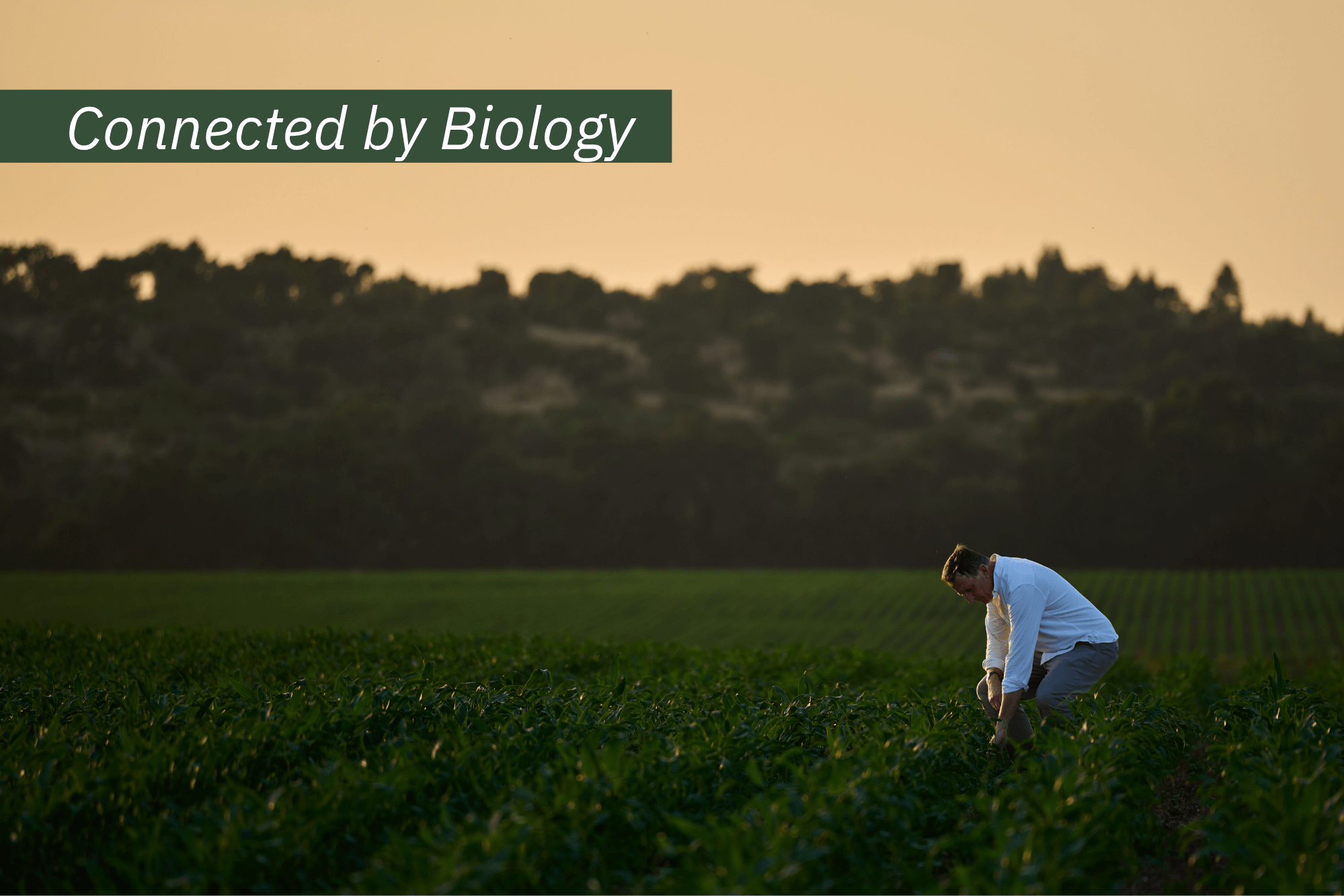
This article is part of the Connected by Biology series, exploring the living systems behind agriculture.
→ Next: Local decisions, lasting impacts — how soil management shapes biodiversity