

Prof. Ricardo Freixial
Professor at the University of Évora and Farmer
Eng. Rui Amante
Alltech Crop Science
Alltech Portugal expresses its gratitude to Prof. Ricardo Freixial for his collaboration in the preparation of this article.
It is possible to restore soil fertility and structure in a sustainable way.
The Problem:
Growing and maintaining crops in soil using inappropriate practices can lead to degradation risks such as physical and chemical erosion, salinity, and contamination, ultimately resulting in fertility loss due to unsustainable intensification, overgrazing, wildfires, or residue burning practices. Today, soil is a threatened natural resource.
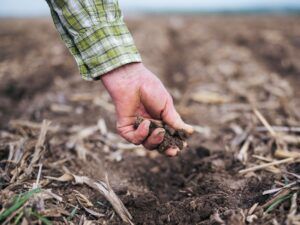 According to the International Soil Reference and Information Centre (ISRIC), approximately 17% of the Earth’s surface has suffered severe degradation, and this area continues to expand.
Excessive exploitation, improper practices, overgrazing, and the lack of necessary compensatory measures have resulted in a sharp decline in nutrients, water and wind erosion, soil compaction, and salinization, leading to the deterioration of its physical, chemical, and biological properties and, consequently, a decline in crop productivity.
According to ISRIC, over the past 40 years, 30% of agricultural soils (1.5 billion hectares) have been abandoned due to erosion and degradation, and an additional 2 million hectares are lost annually due to severe soil degradation. This means that humankind has degraded 25% of occupied land, with much of this damage occurring in the last 150 years.
Even when imperceptible, the rate of soil erosion exceeds its renewal rate (0.5 cm per 100 years). Estimates suggest that in temperate countries, this rate is 10 to 20 times higher, while in tropical regions, it is 20 to 40 times higher. It would take approximately 500 years to rebuild 25 mm of lost soil due to erosion.
Thus, considering 15 cm as the minimum depth for agricultural soil, productive farmland is a non-renewable ecosystem or one that can only regenerate over extremely long periods, and it is at risk, as it degrades at a much faster rate than its renewal capacity.
According to World Bank estimates, cereal production is expected to increase by 50% (from 2.1 to 3 billion metric tons) and meat production by 85% (to reach 470 million metric tons) between 2000 and 2030.
Conservation Agriculture allows farming to be carried out in an agronomically, environmentally, and economically sustainable manner, ensuring food security while seeking to maintain or improve soil fertility, so that future generations can achieve equal or higher productivity levels compared to conventional methods, improving their quality of life.
The Solution:
The concept of Conservation Agriculture (CA) aims to reverse the degradation cycle associated with the establishment and maintenance of crops under conventional soil tillage practices.
Its main objective is to restore soil fertility by improving its physical properties (erosion control and structure maintenance or enhancement), chemical properties (increasing organic matter content), and biological properties (creating and maintaining favorable conditions for soil organisms).
CA seeks to restore the fertility of degraded and structurally damaged soils by sustainably managing the agro-ecosystem, thereby increasing productivity, achieving higher profitability with food security, and preserving and strengthening natural resources and the environment.
To achieve this, key interrelated principles and practices are adopted, including:
- Direct Seeding (DS) for annual crops.
- No tillage for permanent crops.
- Surface residue retention.
- Crop rotation.
- Permanent vegetative cover in the interrows of perennial crops.
- Integrated weed management.
- The use of machinery designed to minimize soil structure disturbance.
- Grazing management.
Additionally, soil carbon sequestration plays a key role in environmental carbon balance. Various studies have demonstrated that compared to conventional agriculture with soil tillage, Direct Seeding and CA enhance biodiversity, increase carbon sequestration, and reduce CO₂ and N₂O emissions into the atmosphere.
Another significant advantage of this alternative approach is the improvement in water use efficiency in agriculture, as it increases the soil’s water retention capacity, reduces evaporation losses, and minimizes erosion.
The Benefits:
 In perennial crops, maintaining a permanent vegetative cover in interrows, without soil tillage, provides not only agronomic, environmental, and economic advantages, but also contributes to sustainability in terms of both quantity and quality of crop production.
This practice is also based on minimal fuel consumption, due to reduced soil tillage operations. Additionally, it can offset a portion of global emissions from fossil fuels used in conventional agriculture, potentially making the system a carbon sink rather than a major CO₂ emitter.
Furthermore, Direct Seeding and CA-managed areas are more resilient and less vulnerable to climate change.
These systems exhibit:
- Lower soil temperature fluctuations.
- Better adaptation to climate change effects.
- Reduced erosion from more intense storms.
- Better water infiltration rates and higher storage capacity.
- Minimized water losses.
- Extended growing periods, leading to improved crop maturity and productivity.